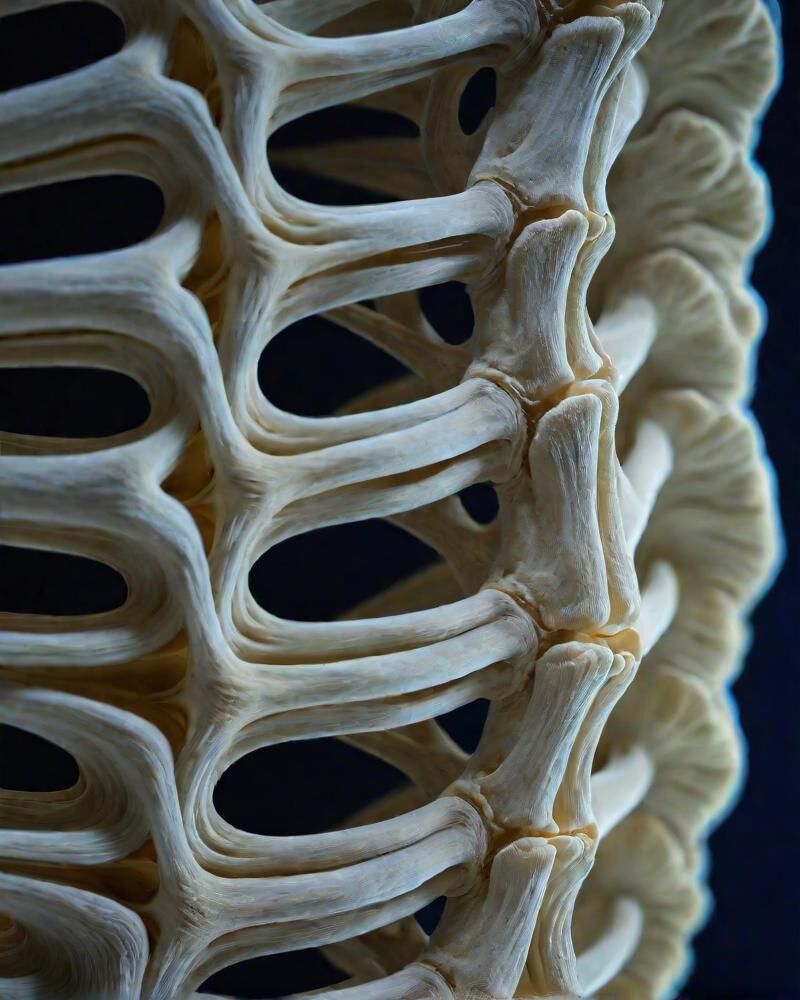
Exploring the Backbone of Human Anatomy
Dive into the intricate world of the human back, unraveling the complexities of the vertebral column and its vital role in our daily lives.
Understanding the Vertebral Column
The vertebral column, or spine, is a pivotal structure in the human body, providing support and flexibility. Comprising 33 vertebrae, it safeguards the spinal cord while allowing for a range of movements. Its significance extends beyond mere support, influencing posture, balance, and overall health.
Key Features of the Vertebral Column
Cervical Spine
The cervical spine consists of seven vertebrae, supporting the head and enabling neck movement.
Thoracic Spine
Comprising twelve vertebrae, the thoracic spine anchors the rib cage, aiding in respiratory function.
Lumbar Spine
The lumbar spine, with its five vertebrae, bears the body’s weight and allows for flexibility and movement.

Muscles of the Back
The back is supported by a complex network of muscles that work in harmony to facilitate movement and provide stability. Key muscles include the trapezius, latissimus dorsi, and the erector spinae group. The trapezius assists in moving the shoulder blades and extending the neck, while the latissimus dorsi is crucial for arm movements. The erector spinae muscles, running along the spine, are essential for maintaining posture and allowing the spine to bend and twist. Together, these muscles play a vital role in supporting the body’s weight and enabling a wide range of motions.
Functions of the Back
Understanding Back Functions
The vertebral column and associated back muscles are fundamental in maintaining an upright posture. They provide the necessary support to keep the body balanced and aligned. The vertebral column, composed of vertebrae and intervertebral discs, acts as a flexible yet sturdy pillar that protects the spinal cord while allowing movement. The back muscles, particularly the deep muscles, stabilize the spine and assist in movements such as bending, twisting, and lifting. This intricate system ensures that the body can perform everyday activities efficiently and safely.
In addition to supporting posture, the back muscles and vertebral column play a critical role in facilitating movement. They allow for the bending and rotation of the torso, which is essential for tasks ranging from simple daily activities to complex athletic maneuvers. The muscles work in coordination to distribute forces and reduce strain on the spine, preventing injuries and enhancing physical performance. Understanding these functions highlights the importance of maintaining back health through proper posture and regular exercise.
Back Anatomy FAQs
Explore common questions about the anatomy of the back, its components, and their functions.
What are the main muscles of the back?
The main muscles of the back include the trapezius, latissimus dorsi, rhomboids, and the erector spinae group. These muscles are responsible for movements such as lifting, pulling, and maintaining posture.
How does the vertebral column support the body?
The vertebral column supports the body by providing a central axis that maintains balance and alignment. It protects the spinal cord and allows for flexibility and movement through its articulated vertebrae and intervertebral discs.
Why is back health important?
Back health is crucial because it affects overall mobility and quality of life. A healthy back supports posture, enables movement, and reduces the risk of injuries. Regular exercise and proper ergonomics can help maintain back health.